Paper, Card, or Reused Packaging for a Free-Standing Model?
Choose paper, card, or reused packaging for a free-standing model by matching flexibility and thickness to the shape, tools, and materials already on hand.
For a small free-standing model, the best material is usually the one that holds the chosen shape without making its joints awkward. Paper, card, and clean reused packaging each behave differently, so a quick comparison can save a build from turning into an exercise in wrestling with a cereal box.
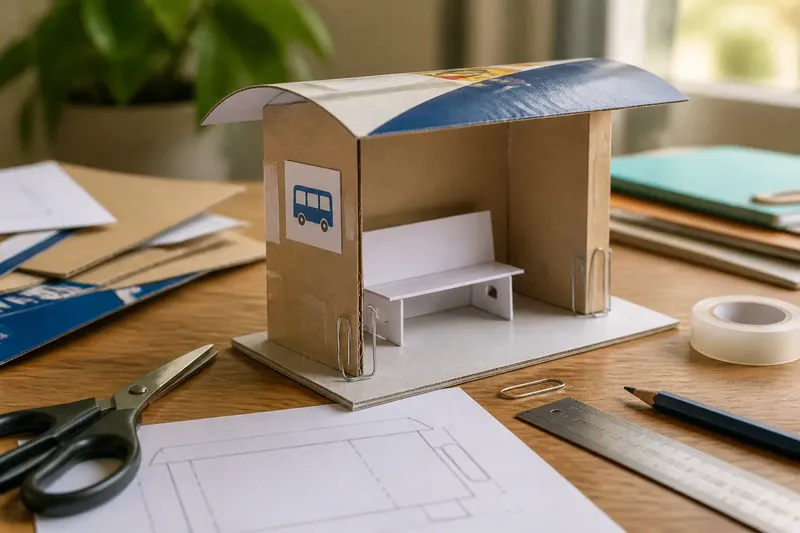
Imagine a learner wants to make a small model of a bus shelter for a desk. The aim is not to reproduce every detail. It is to make a roof, two sides, and a base that stay upright long enough to inspect. The available materials are printer paper, a piece of thin card from a folder, and the clean side of a small packaging box. This invented situation gives each material the same job and makes their differences easier to notice.
What does the model need to do?
Before choosing material, decide what counts as success. Here, the shelter needs to stand on its own, keep its roof above the base, and remain easy to adjust. It does not need to carry weight or survive rough handling. Those limits matter: material choice depends on the shape and purpose, not on a universal ranking.
The learner sketches a simple plan on scrap paper: a base, two side panels, and a roof. The panels can be attached with tabs and paper clips, avoiding a need for special tools. A ruler, pencil, scissors, and removable tape are enough for this small comparison. If a design needs slots, tiny details, or repeated bending, the useful choice may change.
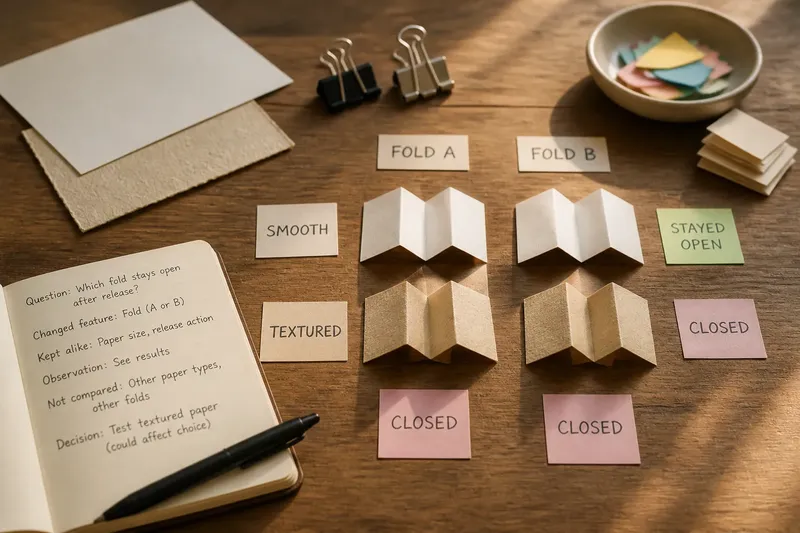
Each candidate is cut into roughly comparable pieces by eye, rather than treated as a laboratory sample. The point is to observe how each handles the same basic parts. The learner also keeps the packaging’s printed surface facing outward on one panel and inward on another, since a smooth printed finish may take tape differently from its unprinted inside.
How does ordinary paper behave?
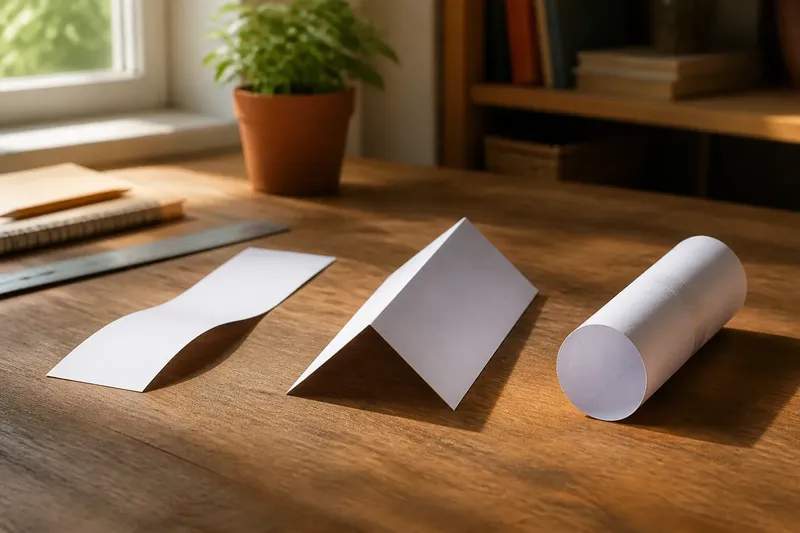
Printer paper is easy to mark, cut, and trim. It bends readily around a pencil or ruler edge, which helps when a model needs a curved roof or narrow wraparound detail. It also fits into small spaces without much fuss.
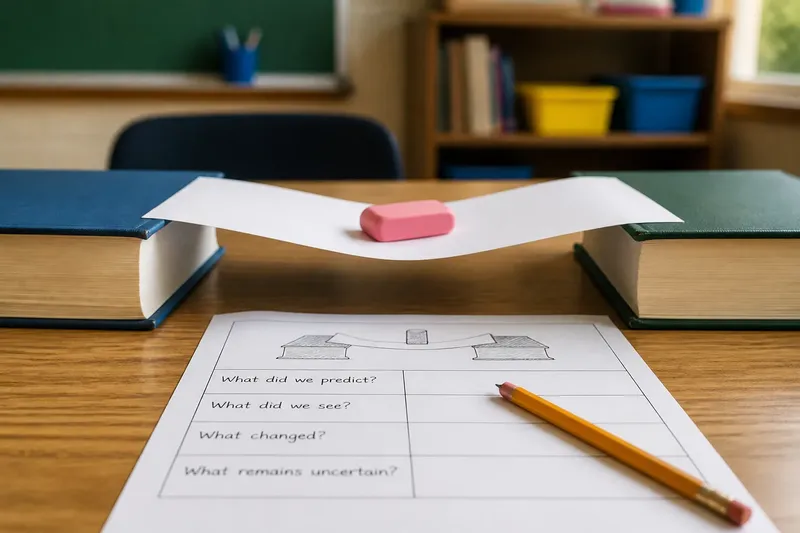
For the shelter’s broad side panels, however, the paper feels too yielding. A panel may bow or ripple when held upright, and a roof made from a single sheet can sag between its supports. The learner can fold an edge or add a narrow strip behind it, but that changes the design and adds another joint to manage.
Paper remains useful for templates and surface details. The learner traces the roof outline onto it, then uses that pattern to cut the sturdier material. That keeps the flexible sheet in a role it handles well rather than asking it to act like a rigid wall.
Does card make a better frame?
The folder card is less willing to bend than printer paper. Its panels feel more self-supporting, and the roof stays closer to its intended shape. For the main walls and base, this is a practical advantage: the parts do not need much extra support simply to stand upright.
That stiffness has a price in convenience. A sharply folded edge can resist closing neatly, and a thick corner can become bulky where several pieces meet. The learner finds that wide tabs are easier to handle than tiny ones. The roof also needs a modest overhang, so its edge does not have to meet the side panels with perfect precision.
Card is a sensible middle choice when the model needs defined flat panels but still has simple joints. It is easier to cut and shape than a thick box wall, while being more self-supporting than a loose sheet of paper. The particular card matters, though: a flimsy folder cover and a dense backing board are not interchangeable just because both are called card.
When is reused packaging worth choosing?
The clean packaging offers a firmer wall than the folder card, and its existing corners can help a box-like model keep a square outline. But the learner notices that the box has a crease, a glued seam, and a printed coating. Cutting around those features takes more planning than cutting a plain rectangle from the folder.
One side of the packaging has a shallow curve from its original shape. The learner uses that section for the shelter’s roof, where a slight curve is acceptable, and reserves a flatter panel for a side. The packaging is not automatically the strongest or easiest option; its usefulness comes from matching its existing shape to a part of the model.
There is also a joining issue. Tape sticks differently to coated and uncoated surfaces, so the learner places a small piece on an offcut first and checks whether it stays put when gently handled. This is a modest observation, not a formal test. If the tape lifts, a paper clip or a tab tucked through a slit may suit the model better.
Which material fits the shelter?
The learner makes a first version with folder card for the base and side panels, packaging for the curved roof, and printer paper for a sign and a roof template. The parts are attached with broad tabs and removable tape. The shelter stands, though one side leans slightly because its tab sits off-center.
For the next version, the learner shifts that tab and trims the roof edge to match the side panels. The observable result is a model that stands more evenly and still shows the packaging’s gentle curve. The improvement comes from fitting the parts together, not from choosing a single winner among the materials.
That is the useful lesson of this invented walk-through: choose by job. Use paper where easy bending or tracing matters; card where flat panels need to support themselves; and reused packaging where an existing crease, curve, or broad panel suits the design. A mixed-material model can be simpler than forcing one material to do everything.
What questions help settle the choice?
Can printer paper support a free-standing model?
It can suit small, lightly handled parts, especially when folded or supported by other pieces. For broad upright panels, expect to add support or choose a stiffer sheet.
Is card always easier to build with than packaging?
No. Card is often easier to mark and cut, while packaging may already have a useful curve or corner. Its coating, seams, and old folds can make joining and shaping less straightforward.
Should every part use the same material?
Not unless the design makes that convenient. A base, curved roof, and thin sign have different jobs, so combining materials can reduce unnecessary trimming and support.
What should be checked before using reused packaging?
Look for a clean, dry surface, a workable flat area, and any seam or crease that could interfere with the part. Check that the planned joining method suits the surface before cutting the final piece.
What is not worth the effort?
There is little value in sorting a whole recycling bin or seeking an ideal grade of card for a small desk model. Start with a few clean offcuts already available. It is also not worth making every joint invisible if the model’s purpose is to compare shapes; neat enough to stand is a useful standard.
For a paper, card, or reused packaging free-standing model, keep the material decision tied to the part’s job and the tools at hand. A paper template can clarify the shape, card can carry the flat structure, and packaging can contribute a curve or ready-made corner. The best final check is simple: set the model down, look for the part that bends or leans, and decide whether a different material or a small design change would address that specific weakness.